Learn enough to make a better construction decision.
You should not need years in the trades to understand what you are buying, what questions matter, or when a project deserves a closer look. These resources are built to make residential construction easier to understand.
Good information should help you decide what happens next.
Construction gets easier when you know which questions matter.
This library is organized around the decisions homeowners actually face, not around publishing articles just to fill a blog.
Hiring a Contractor
Comparing bids, checking fit, understanding scopes, evaluating qualifications, asking better questions, and recognizing when a cheap quote may become an expensive project.
Browse contractor guidanceBudgeting & Cost
Learn what drives residential construction cost, why estimates differ, where allowances hide uncertainty, and what belongs in a realistic project budget.
Understand project costDIY & Hybrid Decisions
Decide what you can reasonably handle yourself, what your time is worth, and where professional help may save more than it costs.
Explore DIY decisionsProject Planning
Scope, sequencing, permits, preparation, expectations, responsibilities, and the decisions that should be clear before work begins.
Plan the projectManaging the Build
Communication, schedules, changes, payments, progress, punch lists, and what homeowners should watch without trying to run the crew themselves.
Understand project executionMaterials, Scope & Real Project Lessons
Practical breakdowns of construction choices, project details, lessons from real work, and what those details mean for the homeowner.
Explore construction detailsUseful information should create confidence—not false confidence.
The goal is not to convince every homeowner they can build everything themselves. It is also not to make construction sound so complicated that hiring a contractor feels like the only safe choice.
Learn enough to understand the decision, the tradeoffs, and when the project deserves professional help.
Sometimes you need numbers. Sometimes you need another set of eyes.
The Resources library is here to help you learn. Ballpark Pro and Above the Mark Construction Advisory are there when the decision needs more support.
Practical guidance for the project in front of you.
New guides, project lessons, comparisons, and homeowner construction resources will appear below as they are published.
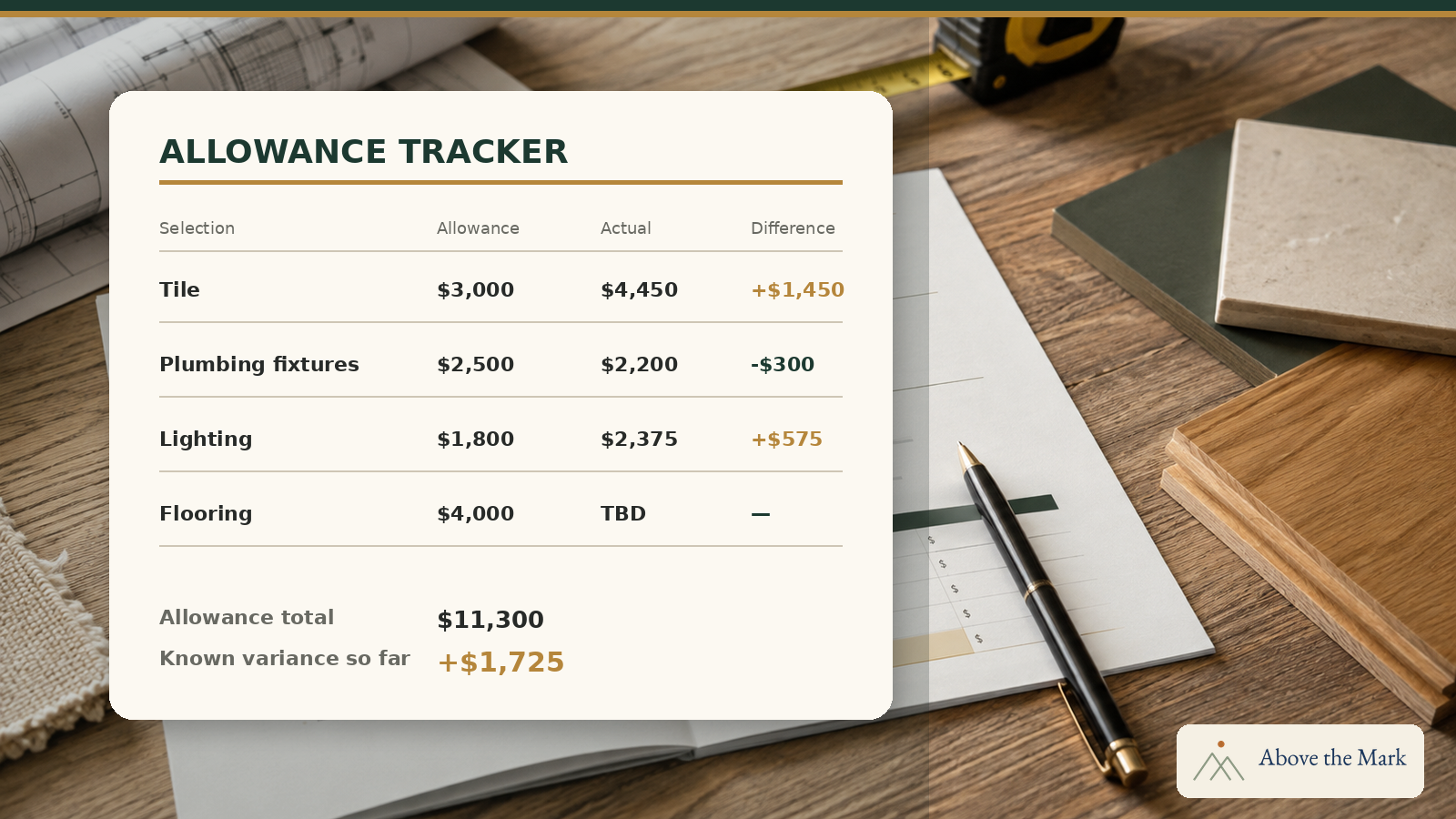
What Is a Construction Allowance—and Why Can It Blow Up Your Budget?
A construction allowance is a placeholder for something that has not been fully selected or priced yet. Learn why unrealistic allowances can make a bid look cheaper than the project will actually be.
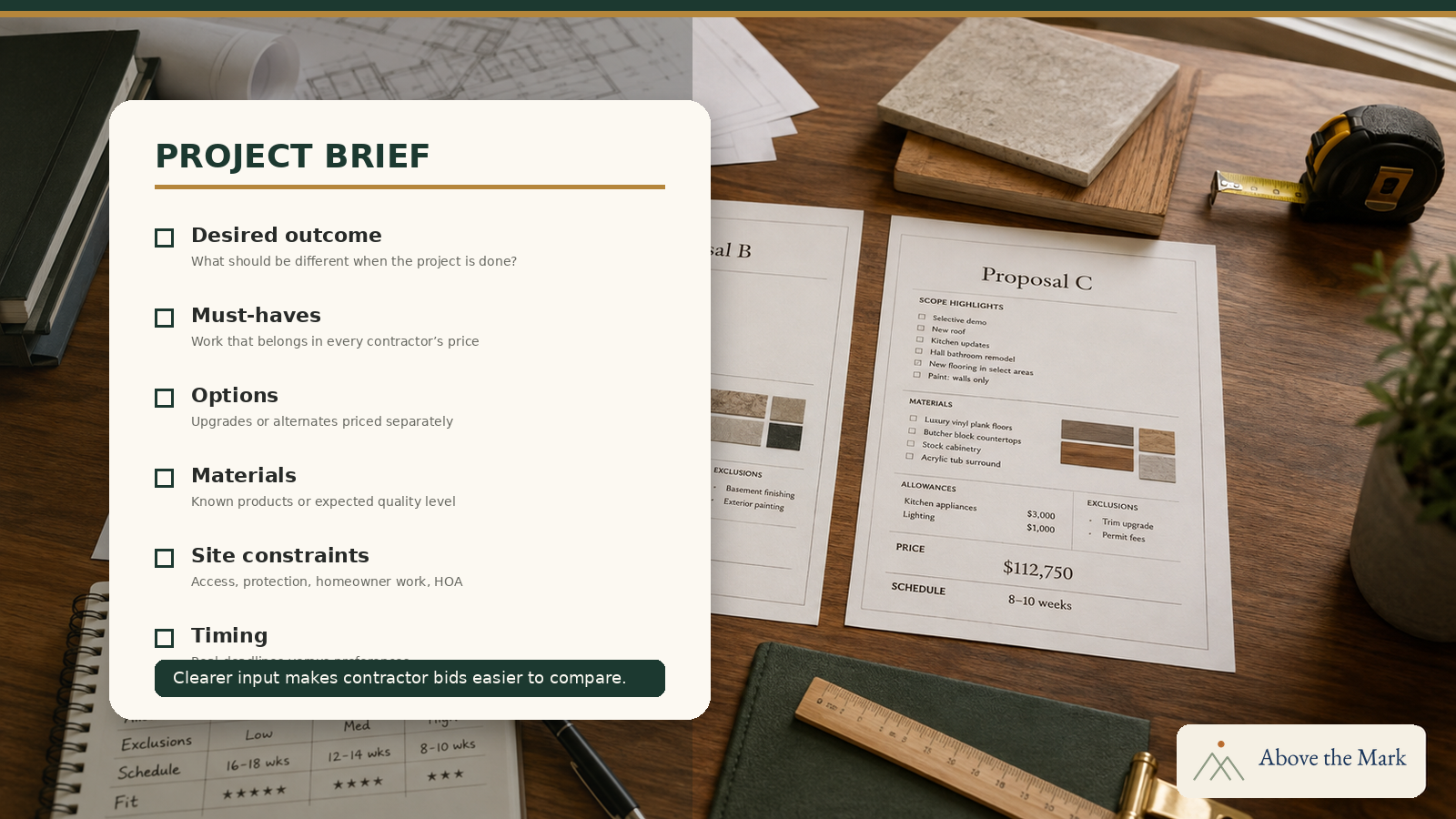
What Should Be Decided Before You Ask Contractors for Bids?
Better bids usually start with a clearer project. Decide the important scope, priorities, selections, constraints, and timing before asking contractors to price the work.
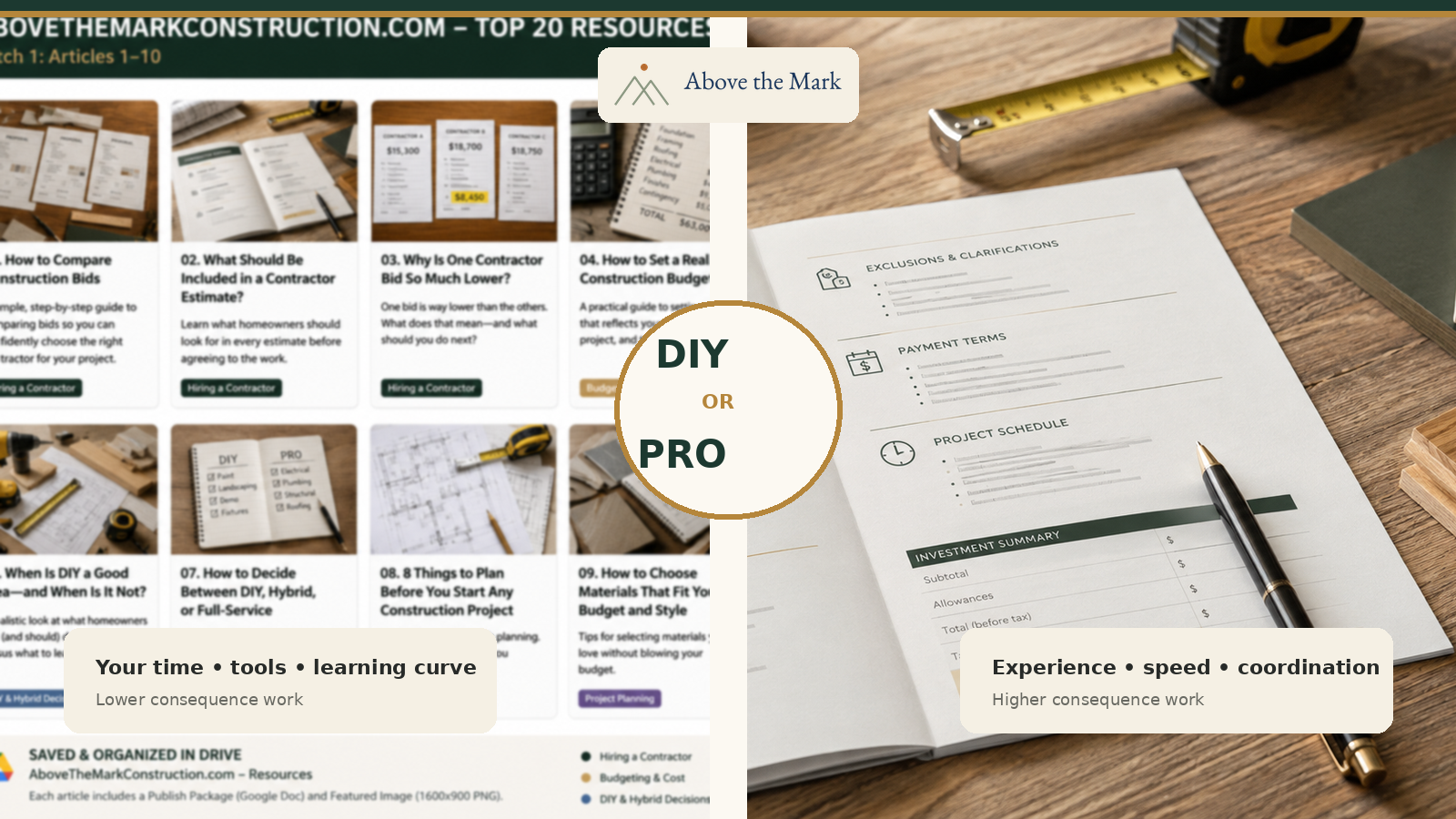
Should I DIY This Project or Hire a Contractor?
DIY can save money on the right project and create expensive rework on the wrong one. Use a practical framework to decide what you should tackle yourself and what deserves a contractor.
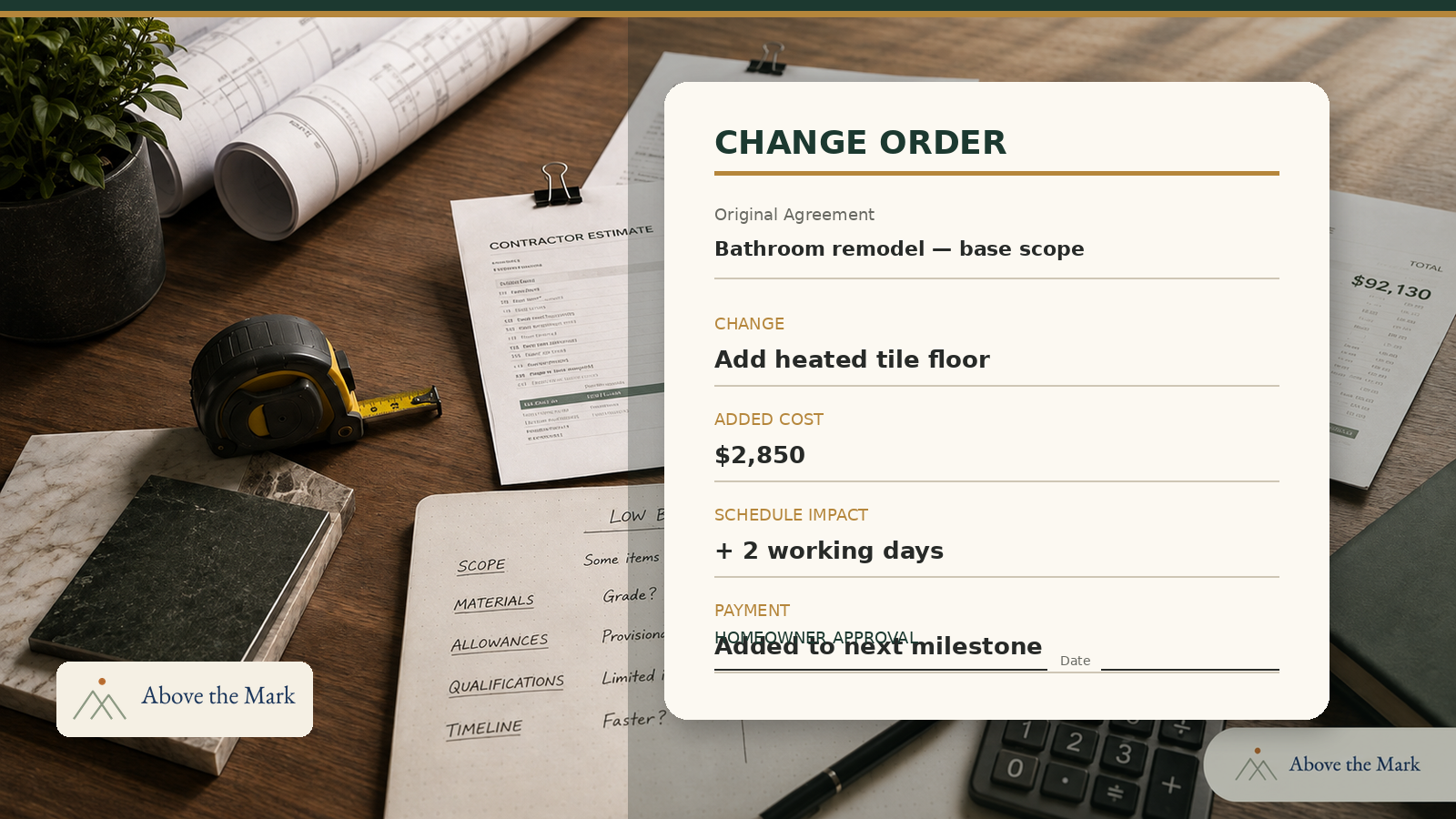
What Is a Change Order—and When Should You Sign One?
A change order is how a construction project formally changes after the original agreement. Learn what should be clear before you approve added work, cost, or time.
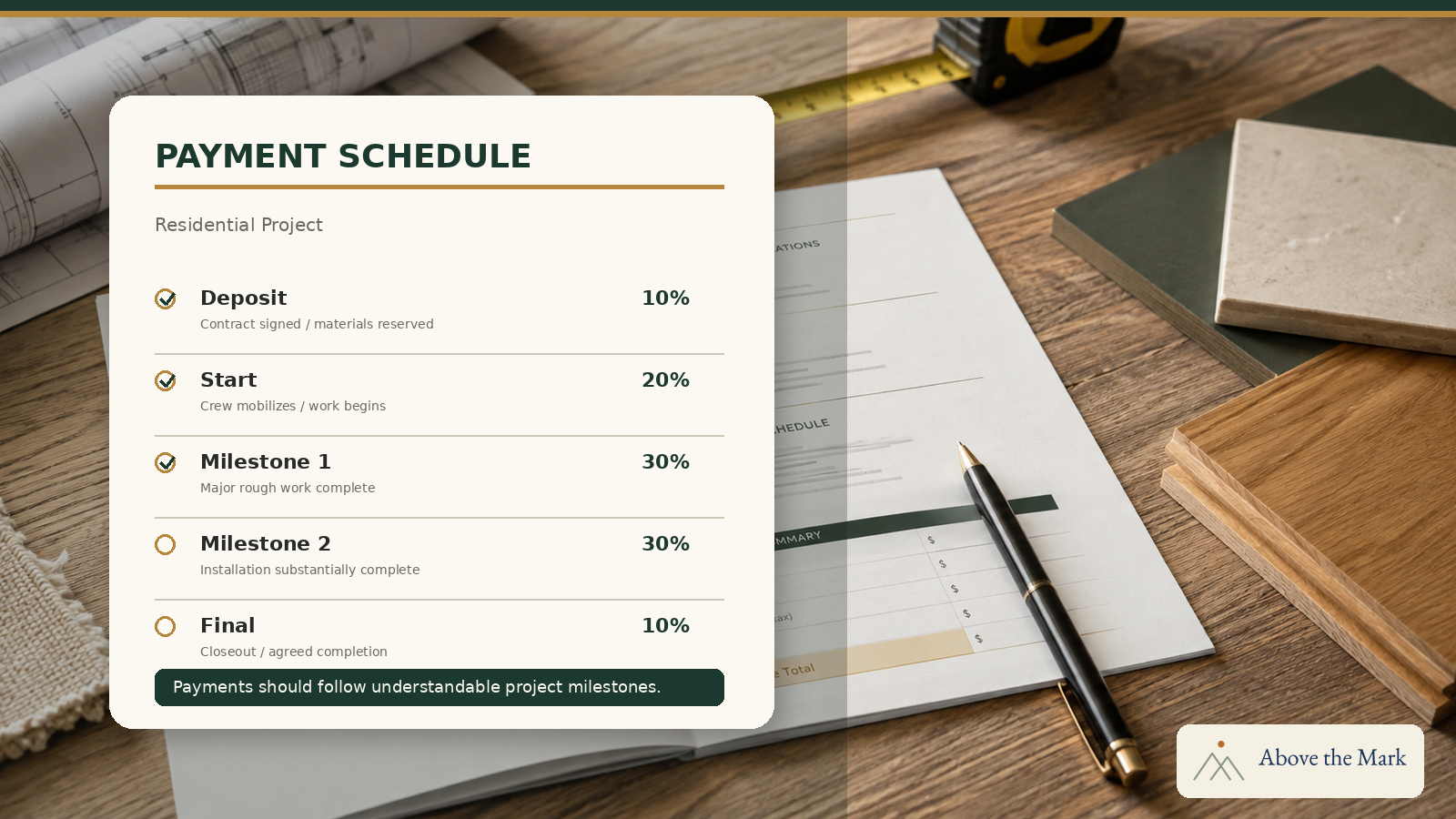
How Much Should You Pay a Contractor Up Front?
A contractor may reasonably need money before work begins, but the amount and payment structure matter. Learn what homeowners should understand before handing over a large deposit.

Why Is One Contractor Bid So Much Lower?
One contractor’s bid is far below the others. That does not automatically make it a bargain or a red flag. Learn what homeowners should compare before choosing.
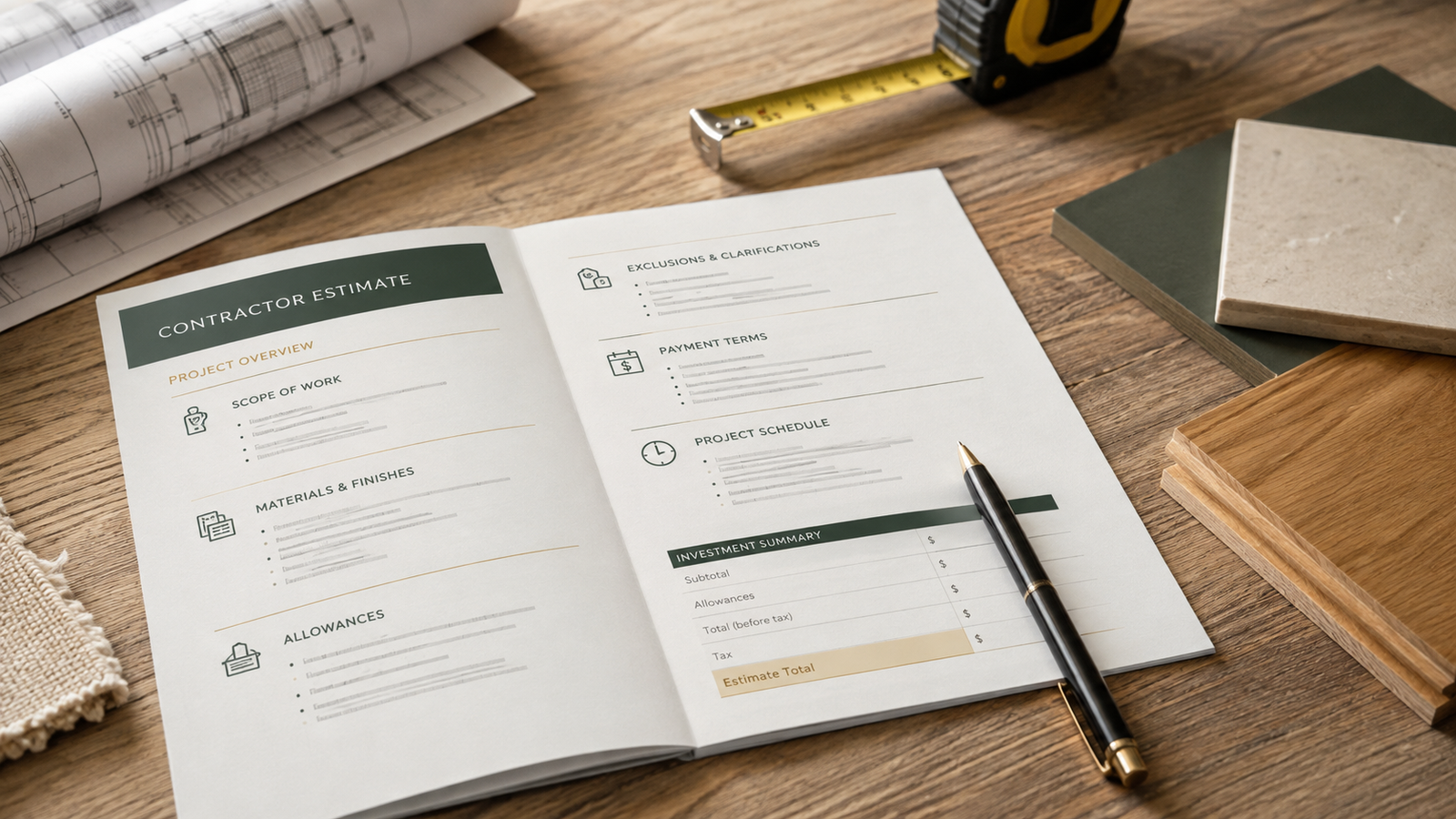
What Should Be Included in a Contractor Estimate?
A contractor estimate should explain more than the total price. Learn what homeowners should look for in the scope, materials, allowances, exclusions, payment terms, and schedule before agreeing to the work.
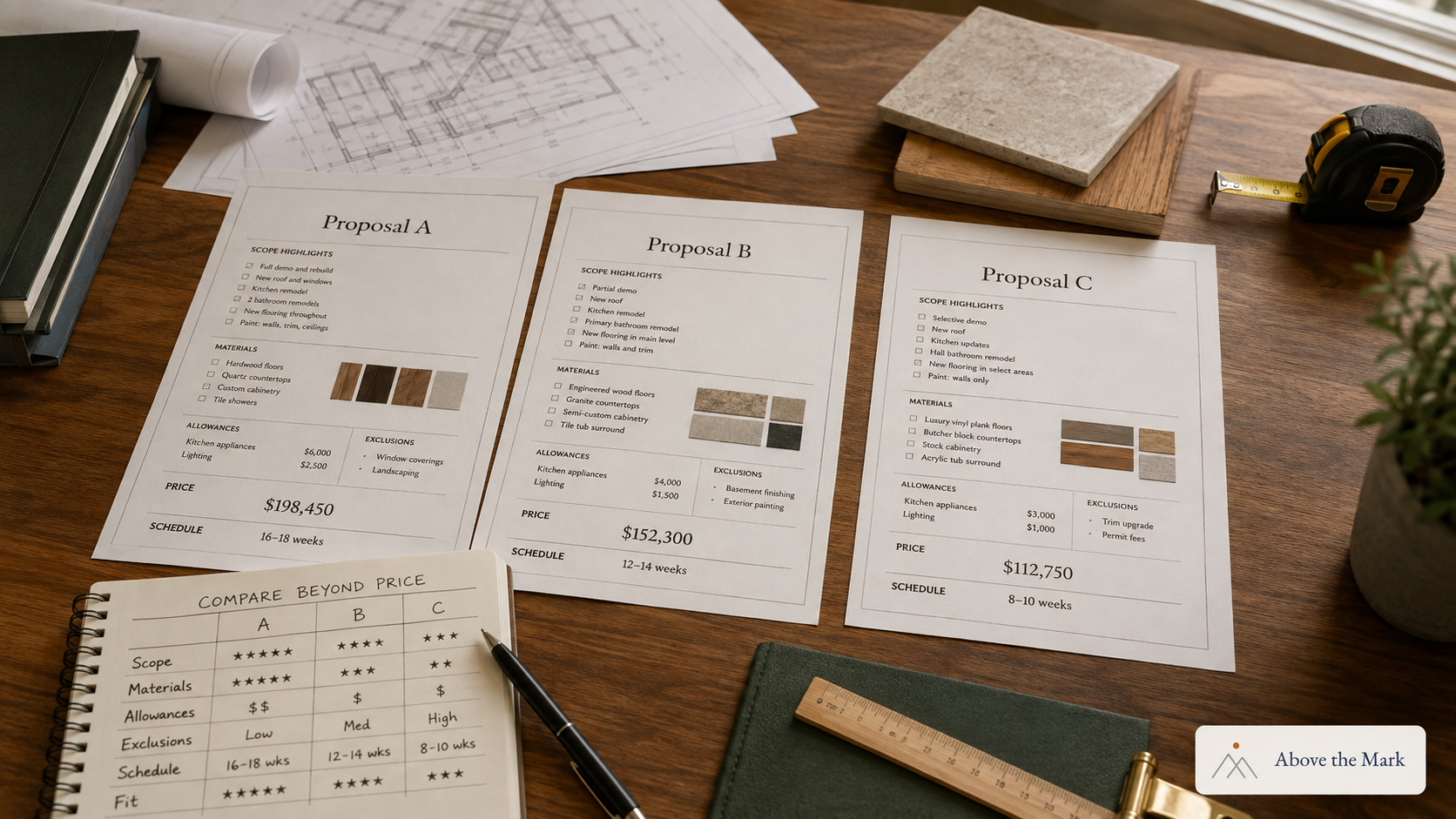
How to Compare Construction Bids
Three contractor bids can show three very different prices without describing the same project. Learn what homeowners should compare before choosing who gets the work.